


Pearls are the only gemstone that is created inside a living organism – in a mother-of-pearl. Each pearl is a work of art, each unique in color, luster, size, and shape.
Along with Alexandrite and Moonstone, it is the gemstone of June.
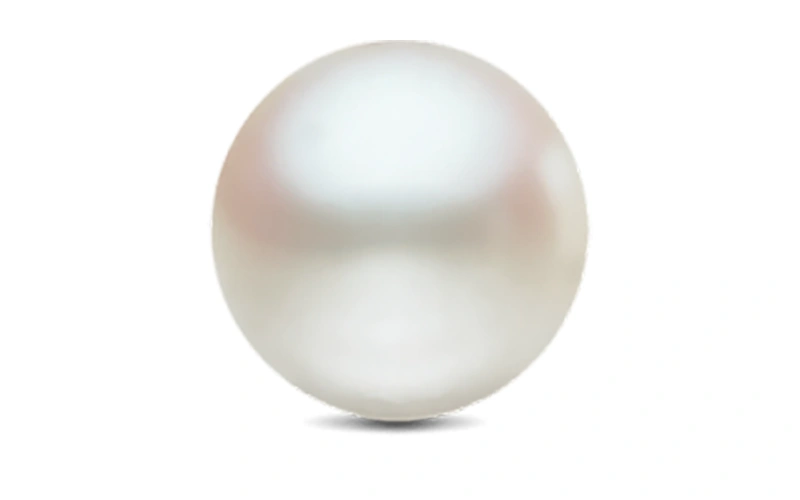

GEM INFORMATION
FEATURES
| MINERAL | organic matter |
| CHEMICAL MARK | CaCO3 |
| COLOR | white /cream (light yellowish brown) /black /gray /silver /pearl tones-pink, green, purple, blue |
| REFRACTION INDEX | 1,53-1,685 |
| BIREFRINGENCE | 0,156 |
| TVRDOSŤ PODĽA MOHSOVEJ STUPNICE | 2,5- 4,5 |
| SPECIFIC WEIGHT | 2,72-2,78 |
WHY PERLA WILL GET YOU
Pearls have captivated people for millennia with its natural elegance, finesse and timeless shine, which does not come from grinding or processing, but directly from nature. Each pearl is a unique natural miracle - its formation takes months to years and is the result of the patient work of the mother-of-pearl, who, layer by layer, creates a fascinating structure full of depth and mystery.
Their charm also lies in their symbolismThey represent purity, femininity, nobility, but also courage and strengthPearls have the ability to adapt to a variety of styles, from classic to modern minimalist jewelry. Plus, their subtle shine flatters every skin tone and adds a subtle yet confident touch to your personality.
Since ancient times, pearls have proven by their existence that they are the most precious gemstones, with which even powerful rulers were buried.
Their delicate shine and organic origin carry a piece of the sea's depth, mystery and poetry, with which they can enchant not only the eye but also the soul. Thanks to their symbolism and timelessness, pearls are an investment that never goes out of style and remains an icon of elegance in all eras.
PEARL AND ITS CHARACTERISTICS
Pearls are the only gemstones of organic origin that are formed inside the clam shells, especially of mother-of-pearl and mussels, as a reaction to a foreign body (grain of sand, parasite) in their body. Unlike minerals, pearls they do not form in the earth's crust, but below the water surface —in seas, lakes, and rivers.
They are made up of layers of nacre (aragonite + organic substance conchiolin), which are arranged in a spherical, oval or baroque shape. Their surface is smooth and their most typical feature is subtle shine and characteristic "pearlescent glow", which reflects light in subtle shades. The quality of the luster is determined by the thickness of the nacre and how much light is reflected from the pearl. Pearls with the highest luster look almost "metallic" and those with poor luster appear chalky to dull.
Pearls are sensitive to chemicals, acids, perfumes, sweat and temperature shocks.
They are classified according to origin and origin. The most basic division is into marine and freshwater and further on natural and cultivated.
Natural pearls They are formed without human intervention. They are formed in the bodies or shell tissue of certain mollusks, usually around a microscopic irritant, usually a grain of sand. Natural sea pearls are very rare and are mostly sold at auctions.
Cultured pearls They are created through human intervention and subsequent care of the shells. Today, most mollusks used in the cultivation process are bred specifically for this purpose.
To begin the process, a skilled technician takes mantle tissue from a mollusk of the same species and inserts a bead from the shell along with a small piece of mantle tissue into the gonad of the host mollusk, or several pieces of mantle tissue without the beads into the mantle of the host mollusk. If a bead is used, the mantle tissue grows and forms a sac around it and secretes nacre into and onto the bead, ultimately forming a cultured pearl. If a bead is not used, nacre forms around the individual implanted pieces of mantle tissue. Care of the mollusk is then required until the cultured pearls are harvested.
Cultured pearls are popular for making beaded necklaces and bracelets or mounted in solitaires, pairs or clusters for use in earrings, rings and pendants. Larger pearls with unusual shapes are popular with creative jewelry designers.
Cultivated variations are grown primarily in China, Japan, Vietnam, and Tahiti.
Freshwater pearls They come from lakes, rivers and ponds. They are often smaller sizes but they are distinguished 100% mother of pearl, so they have very high quality, just perfect shine and they are very durable. They come in a wide range of shapes, rainbow colors, and are reasonably priced. They are most commonly found in shades of white, lavender, and pink. One shell can produce multiple pearls, exceptionally up to 50 at a time. Depending on the desired pearl size (2-15mm), freshwater pearls take 2-7 years to grow.
They are rated on a scale of A–AAA
Freshwater pearls also include the so-called Pearls Biwa (based on the Japanese Lake Biwa) that will captivate irregular shape and metallic luster.
Sea pearls are typically larger, with a distinct shine. Steam between them Akoya, Tahitian and South African pearls.
Akoya pearls have gained admirers primarily because of their almost perfect shape and mirror shine. They belong to the size menším perlám (7 mm) and are characterized by neutral colors, mainly white to gray, with undertones of pink, green and silver. Exceptionally, blue akoya pearls with undertones of silver and pink also appear. They are born in oysters living along the Japanese and Chinese coasts, near Australia, Vietnam and Thailand. They are graded on a scale of A–AAA.
Tahitian pearls are rare, exotic and very elegant. They come in a range of white and cream colors, but are most often found in darker shades of gray, silver and charcoal with a green undertone. They are the only ones that also occur in black color and can have a wide range of shades - dark green, peacock, steel gray, purple, bronze or blue-black. The most sought-after shade is the so-called "peacock" (peacock effect) - a dark base with a multi-colored rainbow reflection. They are grown in their natural environment on the islands of French Polynesia (the most famous of which is Tahiti). The large mollusks produce pearls from 8 to 18 m and dazzle with changing shades and a thick layer of nacre that grows for several years. Tahitian pearls tend to be larger than others and are among the most valuable types of cultured pearlá. They are graded on a scale from A–D.
South Sea pearls are the most valuable and expensive of all cultured pearls. Their value is increased by the large size of the pearls, which means 10-20 mm, limited critical growth conditions and space where their cultivation is possible and a long growth period, which can be 2-4 years. Of all the cultured pearls, South Sea pearls have the the thickest layer mother-of-pearl and they tend to be colorful whitk, creamn, yellown until fullk, honey gole, silverand blue, supplemented soft shine. In terms of shape, irregularly shaped pearls are much more affordable than the nearly round white or golden South Sea pearls, which can fetch astronomical prices. Their main sources are Australia, Indonesia, and the Philippines.
Ďalej poznáme:
Mabe pearls are harvested after 2–3 years, where the original body around which the nacre has accumulated is selected after cutting and replaced with epoxy resin. The pearl is then sealed with nacre. Mabe pearls are most commonly found in silver-gray with reflections of pink, purple or blue.
Keshi pearls They occur randomly and are essentially a by-product of pearl farming. They are born in both marine mollusks and freshwater mussels, primarily in China. In fact, they could be described as the product of a misseeded oyster, as they are formed when a bead or grain of sand slips out of place.
WHAT IS THE MAGIC OF PEARLS?
The charm of the pearl lies in the fact that it is the only gemstone that creates a living organism and moreover, without the need for grinding, machining or refining.
It is formed slowly, by the layering of nacre around a foreign grain, as a mollusk's response to irritation - and it is from this defense mechanism that something delicate, pure and beautiful emerges. This contrast between the vulnerability and fragility of the mussel and the hardness and splendor of what emerges from it makes it a symbol of extraordinary strength and admirable beauty.
Pearl has natural shine, which enchants and, above all, never wears out. Each has its own character, subtle differences in color, shape or shine.
Whether you perceive it as symbol of purity, wisdom, femininity or elegance, always carries within itself timeless charm and a silent message: true beauty comes from within.
These organic gemstones are especially loved by women and are an ideal gift for a bride or as jewelry on their wedding day.
VALUE
The value of pearls depends on several factors, including origin, luster, shape, surface and color. These determine their quality, rarity and market price. In general, the following applies: natural pearls (without human intervention) are extremely rare and the most expensive, with the highest values being achieved by historical specimens with proven provenance. However, today the market is dominated mainly by cultured pearls, whose price varies according to type and quality.
Origin: Natural pearls from the Persian Gulf, India or the Gulf of Mexico fetch record prices at auctions. Cultured pearls are more common, but pearls from the South Pacific or Tahiti are still very valuable.
Size: Larger pearls (especially over 10 mm) are significantly more valuable, with South Pacific pearls reaching up to 20 mm.
Gloss (orient): The intensity and quality of the pearlescent shine is one of the most important criteria. The brighter, more vivid and deeper the shine, the higher the price.
Shape: Perfectly round pearls are the rarest and most valuable, while baroque (irregular) shapes are less expensive but have their own artistic charm.
Surface: A smooth and flawless surface without blemishes or scratches increases the value of the pearl.
Color: The most valuable colors depend on the type of pearl. The most valuable include, for example Tahitian black pearls with peacock reflection, South Pacific golden pearls or white Akoya pearls with pink luster.
A quick overview from the cheapest to the most expensive pearls and their value on the market:
Freshwater pearls have a low to medium value, exceptionally higher for extra quality pieces.
Akoya pearls they have a medium to high value (depending on quality, of course).
Tahitian pearls (black pearls) are in high to very high values.
South Pacific pearls (South Sea) They are the most prized. Their value is very high and they are often the most expensive cultured pearls.
For pearls, they are used two rating systems. A–D scale and AAA–A scale. While color significantly affects the final price of pearls, it does not always necessarily affect their classification. For example, a string of light yellow AAA grade pearls can be significantly different in price from the same string of deep gold AAA grade pearls.
| Rating A–D | Hodnotenie AAA–A | Description and criteria |
| The perfect pearl | The perfect pearl | Bezchybná perla s excelentným (excellent) leskom. Pred zasadením či vŕtaním perla nevykazuje žiadne inklúzie alebo nedostatky. |
| A | AAA | At least 90% of the pearl's surface is flawless. No more than 10% of the pearl's surface exhibits tiny, concentrated imperfections. Only one deep inclusion allowed. The pearl should be set or drilled without further modification. Very good gloss. |
| A/B | AA+ | At least 80% of the pearl's surface is flawless. No more than 20% of the pearl's surface exhibits tiny, concentrated imperfections. Only one or two deep inclusions are allowed. The pearl should be set or drilled without further modification. Good to very good gloss. |
| B | AA | At least 70% of the pearl's surface is flawless. At most 30% of the pearl's surface exhibits tiny, concentrated imperfections. The pearl should be set or drilled without further modification. Good to very good gloss. |
| C | A+ | At least 40% of the pearl's surface is flawless. Up to 60% of a pearl's surface may show tiny, concentrated imperfections. Deep inclusions must not exceed 10% of the pearl's surface. Fair to very good gloss. |
| D | A | At least 60% of the pearl's surface shows imperfections. Deep inclusions and/or white spots within inclusions cover up to 20% of the pearl's surface. Poor to very good gloss. |
Distinguish real pearls from imitations It can be challenging at times, but there are some simple and effective ways to spot them even without professional equipment.
Appearance and surface
Genuine pearls have a slightly uneven, naturally textured surface with minor imperfections that add authenticity to the piece of jewelry.
Imitations (glass, plastic pearls) are often too perfect, smooth, and uniform.
Gloss (orient)
Genuine pearls have a deep, velvety, almost three-dimensional shine (so-called orient), which changes at different angles of light.
The imitations appear rather flat, with an artificial, glassy sheen without depth.
Tactile test (so-called tooth test)
When you gently rub the pearl against your teeth, you will feel a slight roughness or grittiness, caused by the miniature aragonite crystals.
Fake pearls are completely smooth to the touch.
Weight
Real pearls are heavier for their size and appear solid.
The imitations (mainly plastic) are noticeably light.
Shape and size
In natural and high-quality cultured pearls, small variations in shape, diameter, and surface are common.
Fake pearls are usually completely uniform and serially identical.
There are also so-called Majorcan pearls (also known as Mallorca pearls), which are among the best imitations - indistinguishable from the real thing, but still a synthetic product.
Professional verification
The most reliable way is to have pearls checked in a gemological laboratory, where their structure is tested by X-ray, which detects the presence of nacre layers (real pearls) or a homogeneous core (fake pearls).
COLOR
The color of a pearl depends on the type of mother-of-pearl, the environment, and the content of organic and mineral substances in the shell. Pearls do not have just one color, they are perceived bodily (basic) color and overhead reflections, which give pearls depth and elegance.
Color is defined by three factors. It is body color, overtone(undertone/gloss) and orient (rainbow effect).
Colorkf body (Body Color) is the basic color of a pearl, its dominant shade that we see at first glance. It is this color that determines its color. It significantly affects the value of a pearl, which depends directly on the rarity of the color shade.
White The color is classic and most desirable, symbolizing purity and elegance. Combined with a pink tinge, it is also the most expensive, along with deep golden pearls.
Cream has a warmer shade of white. It often occurs with a subtle yellowish or peachy tinge.
Pink has a delicate, romantic shade, popular with freshwater pearls.
Silver the color has a cool and sophisticated sheen, especially prized in Akoya pearls.
Gold is typical of South Pacific pearls and looks very luxurious.
Gray has subtle smoky tones, often with a bluish or greenish sheen.
Black are only Tahitian pearls, with reflections of green, blue, purple or bronze. There are also black pearls that do not come from Tahiti, but they have been artificially treated or dyed.
Blue is very rare in pearls. It is often accompanied by steel or lavender reflections.
Green are exotic and very interesting pearls, mostly occurring in darker shades.
Purple (lavender) is occurs mainly in freshwater pearls and is soft and playful.
Overton is a secondary color reflection that is cast on the surface (e.g. pink, bluish, green). These are very subtle shades that describe the overlay or color reflections that a pearl shows. Not all pearls have an overtone.
Orient is a subtle shimmer of color often found in Tahitian pearls and is caused by the interference of light in nacre. Pearls that exhibit orient colors are much more valuable.
Mentioned mother-of -pearl is actually a layer of mineral (aragonite) and organic conchiolin that is naturally secreted by mussels. It is thanks to it that pearls have their characteristic shine.
White mother-of-pearl is the most common, it is bright and shiny.
Silver mother-of-pearl It has a cold metallic feel, but it is very popular in jewelry.
Golden mother-of-pearl has a warm, rich hue, especially in South Pacific pearl oyster shells.
Pink mother-of-pearl It is very delicate, giving the pearls a romantic undertone.
Purple and lavender pearl occurs mainly in freshwater species.
Green mother-of-pearl has a coloration reminiscent of peacock feathers. It occurs in Tahitian mother-of-pearl.
Blue-green mother-of-pearl is exotic and distinctive. It is also known as a "gasoline stain" shine.
Black mother-of-pearl has a dark base that highlights other color highlights.
ORIGIN
The origin of pearls goes back to the depths of the sea and millennia of history. As the only gemstone, it is created in living organism– clam, i.e. oyster or mussel.
Today, pearls are divided into natural and cultured.
1. Natural pearls are very rare. Historically, they were mined mainly in Persian Gulf, Indian Ocean and off Sri Lanka. Today they are extremely rare and expensive
2. Cultured pearls are common today. They are created by inserting a "nucleus" into a clam, but the organism creates them itself. They are grown in pearl farms around the world.
Akoya pearls in Japan and China.
South Sea pearls in Australia, the Philippines, Indonesia
Tahitian pearls in French Polynesia
Freshwater pearls especially in China
Historical origin
Pearls are known for since ancient times – in Egypt, Rome, India and China they were perceived as symbol of wealth, purity, femininity and divine gift. Ancient civilizations valued them more than gold.
Pearls were the only gemstone in the known world that could not be mined, which is why they were referred to as "mermaid tears" or "moonlight kisses."
The oldest written mention of pearls comes from Chinese sources from 2206 BC The Chinese were the first to try to grow pearls, but significant success in pearl cultivation was not achieved until the Japanese at the beginning of the 20th century.
In ancient China, black pearls were considered symbol of wisdom.
Ancient Egyptians They valued pearls so much that they were buried with them.
Christians and Hindus adopted pearls as a symbol of purity. The tradition of the bride wearing pearls on her wedding day is still maintained today.
Quran speaks of pearls as one of the best rewards a person can receive in paradise. The pearl itself has become a symbol of perfection in the Muslim world.
Like other gemstones, they also haveáhidden meaning.
Modré perly značia, že ich nositeľka nájde lásku,
Black and gold pearls odkazujú na wealth and prosperity,
pink to success, fame and favor of Happiness,
brown to practicality, masculinity, reliability and harmony.
White pearls symbolize innocence, charm, purity and a new beginning.


