


The rare and unique alexandrite has something magical about it. Perhaps the most significant property that sets it apart from most gemstones is its ability to change color depending on daylight or artificial light.
Green in daylight and ruby red under lamplight make this gemstone, named after Russian Tsar Alexander II, one of the younger, yet all the more interesting, discoveries in the world of gemstones.
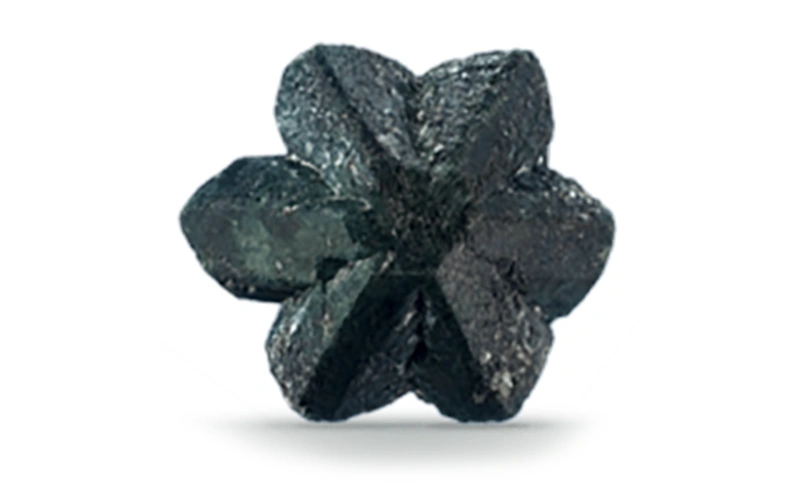

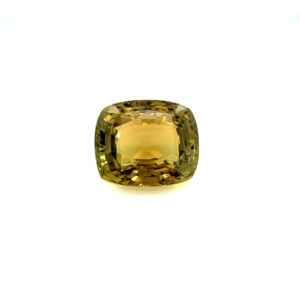
GEM INFORMATION
FEATURES
| MINERAL | Corundum |
| CHEMICAL COMPOSITION | Mg3Al2(SiO4)3 |
| COLOR | Yellow | Light Green | Orange to Dark Red |
| REFRACTIVE INDEX | 1.762 – 1.770 |
| BIREFRINGENCE SPECIFIC GRAVITY | 0,008 – 0,010 |
| MOHS | 4,00 |
| HARDNESS | 9,0 |
WHY ALEXANDRITE WILL WIN YOU
Alexandrite is one of the rarest and most expensive gemstones known for its phenomenal color shades. It will win you over with its uniqueness, uniqueness, distinctive shine and purity. You can fall in love with it thanks to its color-changing effect and with its help become extraordinary during the day and at night, because the stone changes its color in different types of lighting.
With an Alexandrite pendant, you will be an eye-catcher at any ball, celebration, or occasion where you need to stand out.
ALEXANDRITE AND ITS CHARACTERISTICS
Alexandrite belongs to the beryl family, more precisely chrysoberyl. It is exceptional in that it can exhibit two specific types of effects. One is the so-called "cat's eye effect" which creates a special light effect/phenomenon on the surface of the stone resembling the elongated pupil of a cat's eye. The second effect is its fascinating color change. This is its most well-known property. Its ability to change color depends on the light source. In daylight it is green, blue-green or blue-violet, in artificial light it is red, purple or raspberry. In a white light source (e.g. an incandescent lamp) it may appear purple or reddish.
It also exhibits pronounced pleochroism, meaning its color changes when viewed from different angles. This is due to its specific crystal structure and chemical composition.
WHAT IS THE MAGIC OF ALEXANDRITE?
The charm and uniqueness of Alexandrite lies mainly in its two natural phenomena - color change and cat's eye effect. Because of its color change, it is referred to as a stone, "emerald by day and ruby by night". It might seem to be a stone of opposites, but its inner strength lies precisely in their union and balance. It is considered a stone of inner peace, creativity and hope and symbolizes the ability to adapt to change.
Along with pearls and moonstones, it is associated with the moon. June.
Due to its durability and hardness, it is suitable for setting in jewelry for both exceptional and everyday wear. Enrich yourself with an alexandrite ring, alexandrite brooch or alexandrite pendant and shine with your uniqueness during the day and night.
It is a piece of jewelry suitable for a 55th wedding anniversary.
VALUE
The value of alexandrite is very high, because it is a rare and extremely valuable gemstone. It is known for its unique color change effect – the so-called “alexandrite effect”. The more pronounced the color change, the more valuable the stone. The highest quality alexandrites have a deep green color in daylight and an intense reddish-purple under artificial lighting.
The most valuable alexandrites come from Russia (Ural), but quality stones are also mined in Brazil, Sri Lanka and Africa. It is also true that the fewer inclusions, the higher the price. However, most alexandrites have some natural imperfections. When determining rarity and pricing, of course, the price of larger alexandrites, which are extremely rare, increases exponentially.
COLOR
The color of alexandrite can vary depending on where it was mined. Generally, the highest quality stones, mostly green, are found in Africa.
Indian alexandrite usually has blue or grass-green hues in daylight, while Sri Lankan stones are more of a yellowish-green. Alexandrites from Sri Lanka are often larger, but tend to have less color change, and their purple color is more subtle at night. Madagascar alexandrite, on the other hand, can appear more brown than purple in bright light.
Opinions on which color of alexandrite is more beautiful are subjective, with its charm truly lying in the eye of the beholder.
ORIGIN
It was originally discovered in the 1930s in the Ural Mountains of Russia, where it immediately caught the attention of the country because its red and green colors reflected the national military colors of Imperial Russia. It was named in honor of the Russian Tsar Alexander II. Due to extensive mining, this deposit was depleted, and therefore Russian alexandrite is now very rare.
The rediscovery of Alexandrite in other parts of the world has sparked a renewed wave of interest in this remarkable gemstone, often referred to as the “second chance stone.” Its durable material is extremely rare and valuable.
Today, alexandrites can be found in Sri Lanka, India, East Africa, Brazil, Madagascar, Myanmar, Tanzania, Russia, Zimbabwe, the USA and Mexico. However, Russian specimens are most prized for their excellent quality and distinctive color change.


