


Moonstone is a fascinating gemstone known for its delicate beauty and magical reflections, which are caused by the scattering of light between microscopic layers of feldspar.
It is a traditional 13th wedding anniversary gift and an alternative moonstone. June and therefore late Gemini or early cancers.
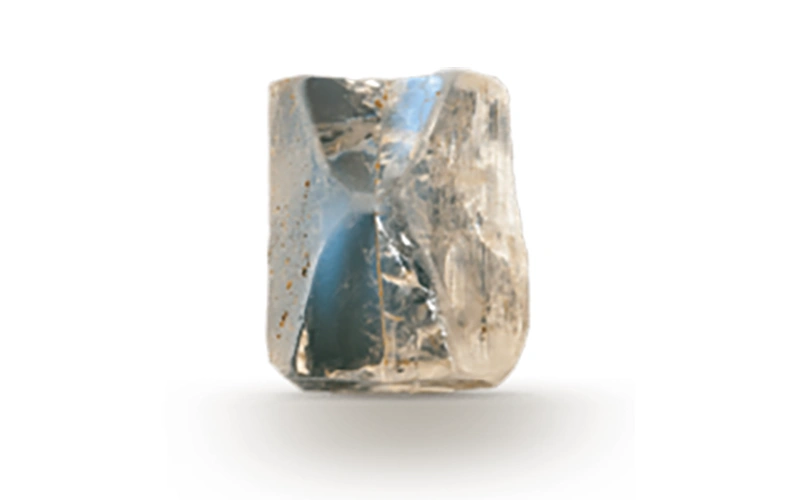
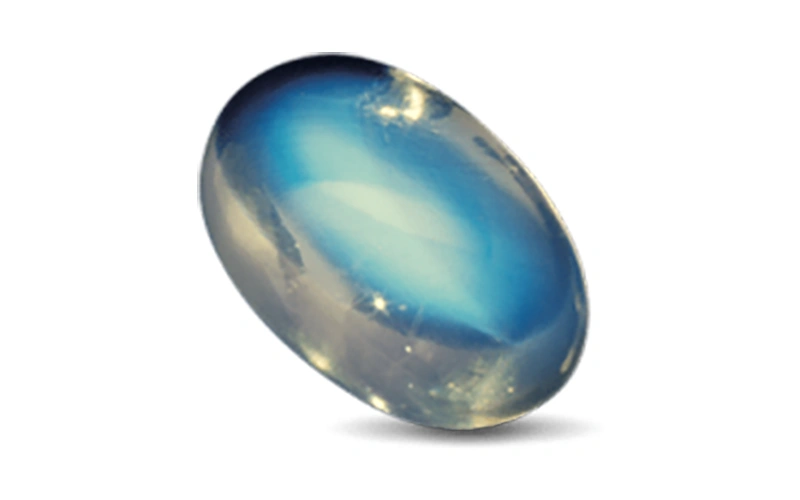


GEM INFORMATION
FEATURES
| MINERAL | Nerve |
| CHEMICAL MARK | KAlSi₃O₈ (potassium aluminosilicate) |
| COLOR | Biela/Krémová/Šedá/Oranžová/Ružová/Modrá/Zelené a Hnedasté odtiene |
| REFRACTION INDEX | 1,518- 1,526 |
| BIREFRINGENCE | 0,005 |
| HARDNESS ACCORDING TO THE MOHS CHART | 6,00-6,5 |
| SPECIFIC WEIGHT | 2,58 |
WHY MOONSTONE WILL WIN YOU
Moonstone became popular during the Art Deco period (1920s), when it was often used in avant-garde designs.
Not only will it captivate you as a delicate and aesthetically pleasing gemstone, but it is also significant for its symbolism and energetic properties. It is the ideal stone for those seeking beauty, meaning, and a connection with nature.
Moonstone is considered a stone of intuition, sensitivity, and inner peace.
As a moonstone, it personifies femininity, cyclicality, change, and emotional harmony.
It is strongly connected to lunar energy, which influences emotions, intuition, and creativity.
In some cultures, it was used as a talisman to protect travelers, especially at sea.
In India, it is considered a sacred stone and a symbol of love and harmony.
MOONSTONE AND ITS CHARACTERISTICS
Moonstone is a fascinating gemstone known for its delicate beauty and interesting properties.
It belongs to the feldspar group, specifically a variety of the mineral adularia or orthoclase feldspar. It is a potassium aluminosilicate with a hardness of 6–6.5 on the Mohs scale, meaning it is relatively soft and more susceptible to scratches.
Its crystal structure is monoclinic and often contains layers of orthoclase and albite.
It can be transparent to translucent with a subtle milky or cream color.
The most characteristic optical property of moonstone is Adularescence. It causes a subtle, pearly sheen that creates the effect of light moving across the surface of the stone. This effect is due to the layered structure of the stone and the refraction of light. It exhibits weak birefringence, which means that light is split into two rays within the stone.
Some moonstones may exhibit chatoyance, a special optical effect resembling a line of light passing through the stone.
Moonstone also exhibits the so-called Schiller effect, which is a subtle shimmering effect on the surface of the stone that is often confused with adularescence.
Moonstone is most commonly found in a colorless variety with a white, blue, or rainbow-colored luminescent effect. The rarest pieces are those that resemble a cat's eye or stardust.
WHAT IS THE MAGIC OF MOONSTONE?
The magic of moonstone lies in its unique appearance, mystical properties, and symbolism that has been associated with it for millennia.
It is known and charming for its special luster, called adularescence, which optically creates a subtle glow that seems to come from inside the stone. It looks as if moonlight is rippling beneath the surface. This effect is most pronounced in quality stones and makes it literally a "living" gemstone.
The ancient Greeks and Romans were already fascinated by the moonstone. In addition to attributing visionary powers to it, they also believed in fertility.
Moonstone is very popular in jewelry. It is ideal for rings, necklaces, pendants and earrings in silver or white gold, where its bluish sheen contrasts beautifully with the metal.
It is popular in bohemian and vintage jewelry.
It is often worn as a personal talisman.
VALUE
The value of moonstone (also known as adularia) depends on several factors, such as its quality, color, size, purity, and origin. Its characteristics and the size of each piece are directly related to its popularity and pricing.
Factors affecting the value of moonstone:
1. Adularescence (optical effect)
One of the most important properties of moonstone is its characteristic adularescence – a bluish or white sheen that moves across the surface of the gemstone as the angle of light changes.
Stones with an intense, clean, and even shine have a higher value.
2. Color
Most valuable: Moonstones with a bluish sheen on a transparent background.
Common: Stones with a white, cream, or orange sheen on an opaque or milky base are more affordable.
Color variations: Orange, pink, or greenish shades of moonstone are rare and more expensive.
3. Cleanliness
Quality moonstones are usually clean or have only small inclusions.
Visible cracks or cloudiness reduce the value of the gemstone.
4. Size
Larger pieces with intense adularescence are rarer and more expensive.
Smaller moonstones, suitable for jewelry like rings or earrings, are more common and affordable.
5. Origin
Sri Lanka: Moonstones from this region are considered some of the best, excelling in their purity and intense shine.
India: Produces moonstones with more pronounced orange and cream hues.
Tanzania and Myanmar: These countries offer rare and high-quality stones.
The “common” and most affordable moonstones are considered milky or opaque stones with a slight luster. Those of higher quality and double the value are transparent moonstones with intense blue adularescence, and rare varieties with perfect luster are considered collector’s pieces. Of course, the larger the more valuable.
COLOR
Moonstone can be transparent to translucent with a subtle milky or cream color.
Jeho typické farby zahŕňajú bielu, krémovú, šedú, oranžovú, ružovú, modrú a vzácne sa môžu vyskytnúť zelené a hnedasté odtiene.
ORIGIN
Sri Lanka: Moonstones from this region are considered some of the best, excelling in their purity and intense shine.
India: Produces moonstones with more pronounced orange and cream hues.
Tanzania and Myanmar: These countries offer rare and high-quality stones.


